
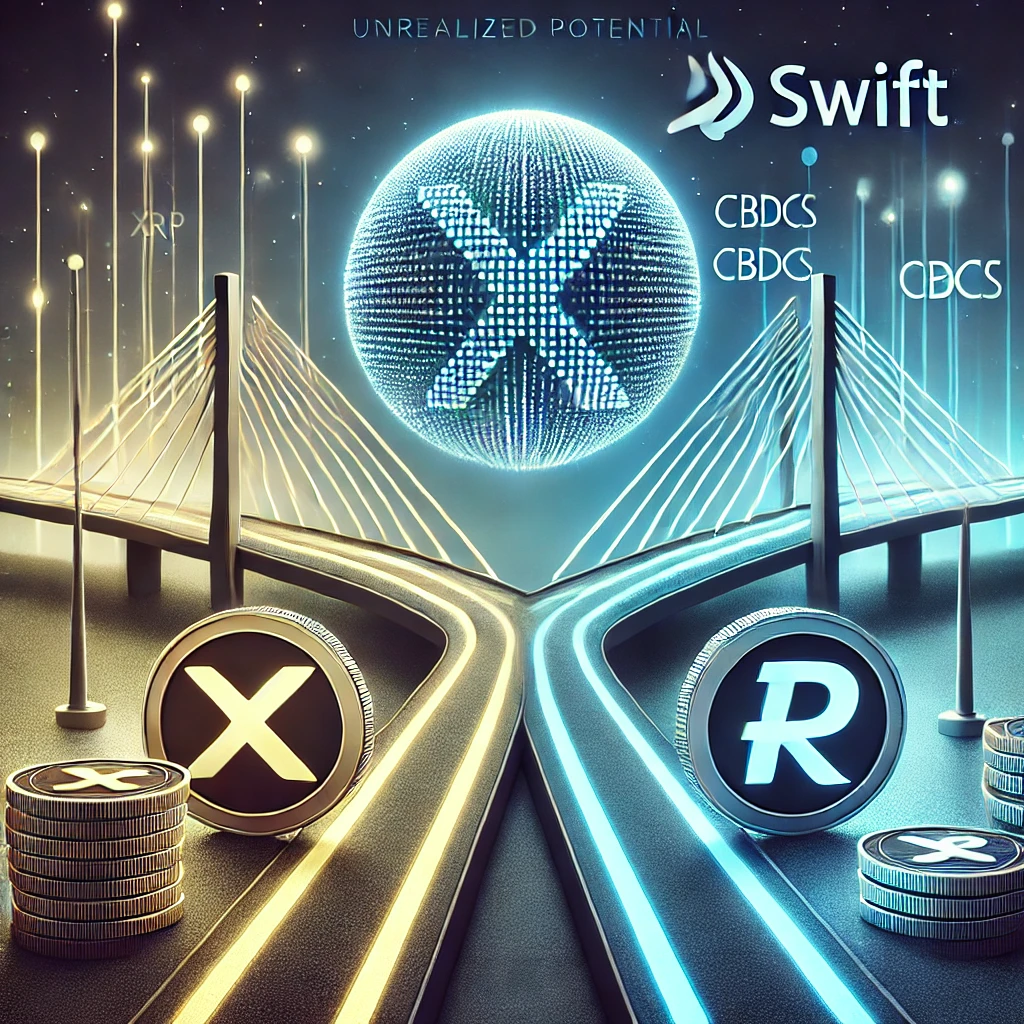
The Unrealized Potential of XRP: A Fix for a System That Isn’t Broken?
Imagine This…
You’re at a car dealership, looking to buy the latest electric vehicle. The salesperson dazzles you with stats: 0 to 60 in 3 seconds, self-driving features, and enough range to drive coast-to-coast. But then you remember…you live in the city, commute 10 minutes to work, and rarely drive further than the grocery store. Do you really need all this innovation, or is your trusty old sedan doing the job just fine?
That’s the conundrum XRP faces with the global banking system. Ripple’s cryptocurrency promises faster transactions, lower costs, and a decentralized future. But here’s the question: does the existing system really need fixing, or is XRP a shiny solution looking for a problem?
Let’s explore whether XRP’s unrealized potential is being held back by the system it’s trying to replace—or by the system not needing it at all.
SWIFT’s Evolution: Fixing Its Own Problems
SWIFT, the global standard for cross-border payments, has long been criticized for being slow, costly, and reliant on pre-funded accounts. But in recent years, it hasn’t exactly been sitting still. Enter SWIFT GPI (Global Payments Innovation), which has addressed many of these inefficiencies:
- Faster Transactions: Most payments settle within minutes or hours, rather than days.
- Transparency: Real-time tracking provides visibility into payment status and fees.
- Wider Adoption: Thousands of banks worldwide have integrated GPI, solidifying SWIFT’s dominance.
And that’s not all. Stablecoins like USDC and government-backed central bank digital currencies (CBDCs) are emerging as new solutions. These alternatives aim to provide the speed and cost-efficiency XRP promises—without the regulatory baggage or volatility.
In short, SWIFT is evolving, and banks might see less reason to look elsewhere. So where does that leave XRP?
Ripple’s Control: A Double-Edged Sword
While XRP is marketed as decentralized, Ripple Labs holds significant control over its supply. Ripple periodically releases XRP from its escrow accounts, raising questions about its financial incentives:
- Revenue Model: Ripple profits from selling XRP, which some critics argue prioritizes the company’s bottom line over adoption.
- Market Manipulation Concerns: Ripple’s control over supply gives it influence over XRP’s price stability, which could deter institutional users.
This centralized aspect is at odds with the decentralized ethos of cryptocurrencies, potentially making XRP less appealing to banks that value transparency and predictability over innovation.
Why Banks Might (or Might Not) Adopt XRP
Banks are notoriously risk-averse, and for good reason. Their reputations—and bottom lines—rely on stability. So, will they embrace XRP? Here are both sides of the coin:
Reasons Banks Might Adopt XRP:
- Cost Savings: Ripple’s On-Demand Liquidity (ODL) eliminates the need for pre-funded accounts, freeing up billions in dormant capital.
- Speed: XRP can settle transactions in seconds, a significant improvement over traditional systems.
- Global Reach: RippleNet already connects financial institutions in over 70 countries.
Reasons Banks Might Stick to Existing Systems:
- SWIFT Upgrades: SWIFT’s GPI addresses many of the pain points XRP claims to solve.
- Regulatory Uncertainty: Ongoing legal battles, particularly Ripple’s with the SEC, make XRP a risky bet.
- Lack of Control: Banks may prefer CBDCs or stablecoins, which align more closely with existing financial frameworks.
Is XRP Solving a Real Problem?
XRP’s vision is bold: revolutionize cross-border payments and free the global economy from the inefficiencies of legacy systems. But its success hinges on one critical question: is there a real problem to solve?
While SWIFT isn’t perfect, its ongoing evolution may diminish XRP’s edge. Meanwhile, stablecoins and CBDCs are gaining momentum, offering similar benefits without the risks of volatility or regulatory challenges. Ripple’s control over XRP supply further complicates its narrative, making banks cautious about adoption.
The Bottom Line
XRP might be a sleek, cutting-edge solution, but if the current system isn’t truly broken—or is fixing itself—it could struggle to find its place. The real challenge for Ripple isn’t proving XRP’s potential; it’s convincing the world that its innovation is necessary.
What do you think? Is XRP a solution the banking world actually needs, or is it just a flashy idea in search of validation? Let us know in the comments!
Why I Recommend Coinbase One for Trading
When it comes to trading crypto, having a reliable and secure exchange is crucial. That’s why I personally use and recommend Coinbase One—a premium membership that comes with some awesome perks, including:
- 💰 4.5% APY on USDC – Earn higher interest on your stablecoins.
- ⚡ Zero trading fees – Save on fees when making high-volume trades.
- 🔹 25% off spot fees with Coinbase Advanced – A great deal for active traders.
- 🚀 Boosted staking rewards – Earn up to 17.25% APY on staked assets.
- ⛽ Free gas on Base – Get a $10 USDC monthly rebate for transactions on Coinbase’s Base network.
- 📊 Analytics via Messari – Access premium crypto research with a 90-day free trial.
- 💳 Exclusive tax benefits – Partnered tax solutions to help you optimize your crypto gains.
Whether you’re actively trading or just looking for a way to maximize your holdings, Coinbase One offers serious value. If you’re interested, check it out here:
Join Coinbase One and start saving today!
Give it a try and see if it fits your trading needs—because in this market, every advantage counts!




 Crypto CoinToss
Leave a comment